Thursday, January 3, 2013

Subrogation


Are you familiar with “subrogation”? It is a common insurance policy provision it is an important one! Your appreciation for insurance will increase if you learn about it!

An insurance policy, no matter what is being covered, is a contract between the insurance company and the person or organization that wants protection. When a policy involves liability coverage, the contract, essentially, means that the insurance company will handle losses (injuries to other people and/or loss or damage to property that belongs to others). However, eligible losses are restricted to those that are the policyholder’s legal responsibility. There are many times that a loss is settled under a liability policy; but someone else may actually be responsible. Consider an example:


Jon and Jenny are new to a neighborhood, so a few months after moving in, they throw a huge party and invite all of their neighbors. One of the activities is volleyball and they set up a net and space to play in their backyard.

The neighbors know each other well and they are quite competitive. During one game, an accident happens. Glen is injured while trying to block a ball at the net. The injury is very serious and Glen ends up paralyzed. He sues Jon and Jenny for his substantial medical costs and Jon and Jenny’s insurance company settles the loss.

Later, it is discovered that Paul, who was on the opposing volleyball team, had grabbed and pulled Glen when they were battling at the net, causing Glen to lose his balance and fall. Jon and Jenny’s insurance company learns of this and they sue Paul to recoup the money they paid for the loss.

The effort to recover payment made by Jon and Jenny’s insurance company illustrates “subrogation”. It is a legal right that allows the insurance company to take over a right held by their policyholder. Once an insurance company claims this right, it can pursue recovery from another person (including other entities such as partnerships or corporations) who is actually responsible for a loss.

Subrogation is an important process. When it is used, it helps to keep everyone’s insurance costs down and it also makes sure that liability insurance policies work as intended – by making sure that those parties who cause losses are held accountable.


--------------------------------------------------------------------------------
COPYRIGHT: Insurance Publishing Plus, Inc. 2011

All rights reserved. Production or distribution, whether in whole or in part, in any form of media or language; and no matter what country, state or territory, is expressly forbidden without written consent of Insurance Publishing Plus, Inc
.

Tuesday, December 18, 2012

Insurance Fraud

Insurance fraud victimizes insurance companies and their customers and it refers to lying to or deceiving an insurer in order to make money or to illegally secure insurance. Some common fraud schemes include:

  • "padding" (inflating the true amount of) a claim
  • lying or hiding (concealing) important information when applying for insurance
  • lying or hiding (concealing) important information when reporting a loss
  • submitting false claims
  • "staging" accidents
  • Failing to report recovered property
  • faking theft claims
  • committing (home or vehicular) arson for profit
As a consumer, fraud should concern you since the cost is passed directly on to you in the form of higher insurance rates. You can play an important role in reducing fraud.


Fighting Auto Insurance Fraud

Persons attempting to commit insurance fraud often do so by deceiving innocent drivers during actual accidents or by involving innocent drivers in "staged" accidents. Do the following in order to minimize this risk:


  • Drive defensively, keeping space between you and surrounding cars.
  • When traffic slows, begin braking before the car in front of you does.
  • Be careful when turning into a lane that allows two or more autos to turn left at the same time. Victims of insurance fraud are often people who float across the line when turning and then are intentionally sideswiped by a person who is "staging" an accident.
If you are in an accident, write down license numbers of all cars involved in the accident, get the names and contact information of all persons involved and their insurers. Count the number of passengers in the other cars and get their names, addresses and any other pertinent information.

Call the police and get a police report even if the damage is minimal. DO NOT let another driver talk you out of calling the police.


Carry a disposable camera in your glove compartment or make use of a cell phones camera feature and take pictures of the damage to the vehicles and of all drivers and passengers in the cars.


Fighting Homeowners Insurance Fraud

It is far more difficult to involve an innocent party in homeowner fraud. However, a homeowner can help himself and help deter fraudulent claims by properly maintaining their home, and by removing or repairing items that could create tripping hazards to outside parties. Also, if someone is injured in your home, be certain that you get full information and be sure that an injured person gets any needed treatment. Carefully document any incident, including all impressions about likely injury. It may also be prudent to show healthy skepticism over any information on medical bills or claims.

Report suspicious actions such as a friend who asks you to store valuable property and you then find that they reported to his insurer that the property was stolen.

Think of insurance fraud as money out of your pocket-because it is. According to the US Chamber of Commerce, fraud adds 25% to property and casualty insurance rates.

If you are involved in an accident and you are suspicious that fraud may be involved, report it to the authorities and your insurer.

--------------------------------------------------------------------------------
COPYRIGHT: Insurance Publishing Plus, Inc. 2012
All rights reserved. Production or distribution, whether in whole or in part, in any form of media or language; and no matter what country, state or territory, is expressly forbidden without written consent of Insurance Publishing Plus, Inc.

Friday, November 30, 2012

Insurance Perils - Part Two

This is part two of a two-part discussion on different causes of loss.

Vehicles -

Damage caused by direct physical damage with "vehicles" is covered by the vehicles peril. Damage caused by objects thrown by vehicles (such as stones, etc.) is covered as well. The vehicles peril does not include loss to a fence, driveway or walk caused by a vehicle owned or operated by the insured or a resident of the described location.


Smoke –

Refers to "sudden and accidental damage from smoke." Any sudden and accidental damage from smoke caused from any source except smoke from agricultural smudging or industrial operations would be covered. The terminology used makes clear that the damage must occur over a short period of time. A prime source of claims is furnace malfunction that results in the backup and blowing of smoke and grit into rooms through a central heating system.

Agricultural smudging would include damage from burn-off of growing materials on or near the covered premises and use of smudge pots to protect growing crops and trees from frost. Damage from smoke associated with businesses would include that caused by the "blowing out" of smokestacks in the course of periodic cleaning. Excluded damage would also include damage caused by smoke from malfunctioning industrial heating and processing equipment.


Volcanic Eruption -

Damage caused to insured property by the eruption of a volcano is covered under the Dwelling Policy Program; however, loss caused by earthquake, land shock waves or tremors is excluded.
This peril is designed to address the damage caused by the eruption of a volcano, including the ensuing lava flow and airborne particles. In most policies, one or more volcanic eruptions that occur within a 72-hour period are considered to be a single covered event.


Vandalism and Malicious Mischief -

Vandalism and malicious mischief are generally cited as a single peril meaning willful or malicious physical injury to or destruction of property. "Vandalism" means willful destruction or defacement of things of beauty. It implies general hostility to nice things and satisfaction from their destruction.

"Malicious mischief" implies damage to property motivated by hatred or spite. It is not associated with beautiful things, but rather with utilitarian things such as machinery and business buildings and their contents. Acts leading to this kind of destruction are premeditated and include those arising from resentment and ill will during labor disputes.

Accidental damage is not covered under the "vandalism" peril. Coverage applies only when the damage is intentional. The vandalism and malicious mischief peril does not include loss to property on the "residence premises" if the dwelling has been vacant for more than a number of consecutive days immediately before the loss (the period may vary by policy). A dwelling being constructed is not considered vacant. Furthermore, the vandalism or malicious mischief peril does not include loss by pilferage, theft, burglary or larceny.
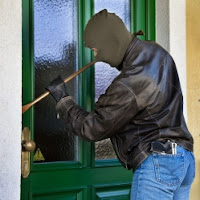


Damage By Burglars -

Damage caused by burglars refers to the damage caused during a break-in and not to the actual stolen property. For example, if two burly burglars attempted to remove a grand piano from the insured residence, the actual damage to the walls, floors and doorways caused by the piano being moved would be covered. The actual loss of the piano would not. Typically there is no coverage for loss to property in a building that has been vacant for more than (a specified number) of days immediately before the loss.


Falling Objects -

This peril covers damage to the exterior of the insured premises and its contents if the falling object first damages the roof or exterior wall. Damage caused by any falling object is covered, including falling trees; however, damage to the falling object itself is not covered. This peril does not include loss to outdoor radio and television antennas and aerials including their lead-in wiring, masts and towers, outdoor equipment, awnings and fences.


Weight of Ice, Snow or Sleet -

Damage to the insured building and/or contents due to the weight of ice, snow or sleet is covered. This coverage excludes loss to certain property, such as: awnings; fences; patios; swimming pools; foundations; retaining walls; bulkheads; piers; wharves; or docks.


Accidental Discharge -

Damage to insured property caused by accidental discharge or overflow of water or steam from within a plumbing, heating, air-conditioning or automatic fire protective sprinkler system or household appliance is covered. Coverage includes the cost of tearing out and replacing any part of the building on the residence premises necessary to repair the system or appliance from which the water or steam escaped.


Damage caused by continuous or repeated seepage or leakage to the insured property is not covered; the cause must be sudden and unforeseen. Damage caused by freezing is not covered under this peril. Further, this type of loss is not covered if the dwelling has been vacant for more than (a specified number of) days immediately before the loss. A dwelling being constructed is not considered vacant.


Sudden and Accidental Tearing Apart -

Sudden and accidental tearing apart, cracking, burning or bulging of steam or hot water heating systems, air conditioning systems or fire protective sprinkler systems or appliances for heating water is covered. The emphasis on this peril is that damage caused by the steam, hot water and related systems must be sudden and accidental as opposed to gradual and foreseen.

Freezing -

Loss caused by the freezing of a plumbing, heating, air-conditioning or automatic fire protective sprinkler system or of a household appliance is covered. This peril does not include loss on the residence premises while the dwelling is vacant, unoccupied or being constructed unless the insured has taken reasonable care to maintain heat in the building or shut off the water supply and drain the system and appliance of water.


Electrical Damage -


This peril involves damage to insured property as a result of sudden and accidental artificially generated electrical current. Tubes, transistors and similar electrical components are not covered.


--------------------------------------------------------------------------------
COPYRIGHT: Insurance Publishing Plus, Inc. 2012

All rights reserved. Production or distribution, whether in whole or in part, in any form of media or language; and no matter what country, state or territory, is expressly forbidden without written consent of Insurance Publishing Plus, Inc.

Monday, November 19, 2012

Insurance Perils – Part One

If you have ever read the insurance policy for your home or rental property, you probably ran head-first into the terms "hazard," "peril," or "cause of loss." These are events that are covered by your insurance. This article (and part two) briefly explains these terms.

Fire
Fire has been defined by the courts as "combustion sufficient enough to produce a spark, flame or glow." By definition, a fire is not smoke or charring. A fire must produce a spark, flame or glow. And not all fires are covered under the fire peril. Over the years, the courts have distinguished between "friendly" and "hostile" fire. A friendly fire is one that burns where it was intended to burn: a flame on a gas stove; a fire in a fireplace; fire in an outdoor grill.

A hostile fire is one that burns where it was not intended to burn: the kitchen drapes; the rug by the fireplace; a tree near the outdoor grill. Only direct damage caused by hostile fire (including smoke from a hostile fire) is covered by the fire peril.

Lightning


Lightning is "naturally generated electricity from the atmosphere." Damage covered by the lightning peril may be the result of lightning itself or the result of a fire caused by the lightning.

With regard to lightning, there is rarely a coverage problem for direct strikes. The other common cause of lightning loss is the surge of electricity, typically caused by lightning striking power company equipment. Appliances in a house can be damaged by the electrical surge. The cause must be established for coverage to apply. A surge from malfunction of power company equipment, or a short circuit, would not qualify.

Explosion

In basic or stripped-down policies, explosion refers to any explosion that occurs within a structure that is covered by a given policy. However, several types of explosive events are usually excluded such as:
  • bursting of water pipes
  • electrical arcing
  • explosions of steam boilers or pipes owned, leased or operated by the insured
  • rupture or bursting of pressure relief devices
In more comprehensive polices, explosion also applies to events that originate externally.

  
Windstorm

The peril of windstorm involves damage caused by direct action of the wind, including high winds, cyclones, tornadoes and hurricanes. Windstorm coverage primarily covers wind damage to a building's exterior, but will also cover interior damage if the wind breaches the exterior (causes a hole or opening in a wall or roof).

Winds must reach sufficient velocity to have caused direct damage at more than one location to establish a "windstorm" loss. However, leakage through an aging roof during heavy rain is not a basis for a windstorm claim. The windstorm peril does not cover loss to the following property when located outside of the insured building: awnings, signs, radio or television antennas or aerials including wiring, masts or towers; canoes and rowboats; lawns, plants, shrubs or trees.

Hail

Hail damage is just that: damage caused by the direct action of hail to insured property. As with windstorm, the hail or some other covered peril must cause damage to the outside of the insured dwelling allowing hail to enter the premises in order for interior hail damage to be covered. As a result, if a window were left open, allowing hail to enter a building, that damage would not be covered.

Similarly, the hail peril does not cover loss to awnings, signs, radio or television antennas or aerials including wiring, masts or towers; canoes and rowboats; lawns, plants, shrubs or trees when located outside of the insured building.

Riot or Civil Commotion

Riot usually refers to a gathering of three or more people that results in the use of force or violence against individuals or property. Damage caused to the insured property due to riot is covered under this peril. Coverage includes direct loss caused by striking employees whether a riot occurs or not. Civil commotion can be defined as an uprising or disturbance by a large number of people. As with riot, damage caused to the insured property due to such an uprising would be covered under this peril.

Bouvier's Law Dictionary summarizes five necessary elements of a riot:
  • At least three persons must be involved
  • There must be a common purpose
  • There must be actual inception or execution of that purpose
  • There must be an attempt to help one another or to cooperate by force if necessary
  • There must be display of force or violence in such manner as to alarm a person of reasonable courage.
There may be no valid distinction between riot and civil commotion. "Civil commotion" has been described in courtrooms as "an uprising among a mass of people which occasions a serious and prolonged disturbance and an infraction of civil order, not attaining the status of war or armed insurrection. It requires the wild or irregular action of many persons assembled together".

Aircraft

The aircraft peril provides coverage from damage caused by aircraft, including self-propelled missiles and spacecraft.

Webster's New World Dictionary of the American Language defines "aircraft" as "any machine or machines for flying, whether heavier or lighter than air; airplane, dirigible, balloon, helicopter, etc."

This peril would apply to damage caused by the falling of an aircraft or any of its parts, on a covered dwelling and its contents.
--------------------------------------------------------------------------------
COPYRIGHT: Insurance Publishing Plus, Inc. 2012
All rights reserved. Production or distribution, whether in whole or in part, in any form of media or language; and no matter what country, state or territory, is expressly forbidden without written consent of Insurance Publishing Plus, Inc.

Wednesday, November 7, 2012

Internet Insurance Information

The Internet, due to this medium’s connection to savvy, technologically astute consumers, has become an ideal method for promoting and selling insurance products. However, even as greater advantage is being taken of electronic insurance transactions, it is important to keep a bit of old, yet still excellent advice - "Let the buyer beware."
 
Possible Danger

In some respects, the 'Net may be no more dangerous than getting information from other sources, but the need for insurance consumers to take care when using such information remains. One major issue is that published information is typically granted a high level of credibility (this includes the information you're currently reading). It is important to be certain of any information before acting on it. Ten different sources of information can give you ten different answers. Therefore, the safest way to use information is to seek and sort through multiple, credible sources rather than merely place full trust in a single source.
 

Items to Keep In Mind
 
The Internet is an incredible tool. However it also provides many opportunities for acquiring information that may be useless or even harmful.
 
Any user should remember the following:


  • it is often impossible to verify who has posted the information and whether the source has any expertise in the subject matter
  • material that appears on the Internet may be presented as facts when they are actually opinions or advertisements
  • the information may be accurate for one set of circumstances, but it doesn't tell you how the information applies to other situations; at the very least, it should contain a disclaimer
  • no credible party may have taken responsibility for keeping the information accurate and current
  • the party that posted the information may possibly have a criminal intent
  • 
    Tim Zeller, Zeller Insurance LLC
    
  • Internet publishers often forget that their audience is global and the information may only apply to a specific group or geographic location
When seeking information to meet your insurance needs, it's important to discuss your concerns with an expert. A professional insurance agent is a good source for getting the answers you need to fit your unique coverage situation.
 
--------------------------------------------------------------------------------
COPYRIGHT: Insurance Publishing Plus, Inc. 2012
All rights reserved. Production or distribution, whether in whole or in part, in any form of media or language; and no matter what country, state or territory, is expressly forbidden without written consent of Insurance Publishing Plus, Inc.

Wednesday, October 31, 2012

Personal Emergency Preparedness Plan


Do you pay attention to the headlines after natural disasters or large accidents occur? More specifically, are you aware of what is typically reported in the aftermath? Typically there are reports of persons stumbling around, seeking aid and at a loss for what to do.

Often there is little an individual can do to control a situation. But it is always better to make what plans one may. That is the simple philosophy behind the personal emergency preparedness plan (PEP) aka Family Disaster Plan


PEPs give individuals and families a plan of action when a natural disaster (such as flooding, earthquake, serious windstorms, tornadoes, etc.) is eminent or should a severe accident (home fire, structural collapse, utility line or pipe breakage, etc.) occur.


Generally a PEP should have the following objectives:

  • Identify safe areas during an emergency – what are safe areas of the home during storm or earthquake? – What safety rules should be followed in event of a fire or flood?
  • Escaping from area that is endangering family members – identify escape routes from every room (at least two)
  • Establishing means for all family members to re-unite – Determine a safe meeting place immediately outside the home, or a neighborhood location – make sure to have access to working radio to access emergency information
  • Ascertaining everyone’s safety – Check everyone for possible injury – apply first aid or contact emergency personnel as appropriate. Check residence for any dangers created by the emergency event, such as leaking utility lines, structural dangers, fire, etc
  • Establish means to contact other family members and loved ones – have access to working phones, post emergency nos., training children on how and when to make emergency calls – make contact list of family members and emergency contacts (work and/or school numbers and e-mails)
Families should also consider issues that support a PEP, such as maintaining proper insurance, having an adequate first aid kit available and acquiring first aid training. Being aware of an area’s emergency plans and procedures as well as information on nearest emergency facilities are also helpful.

The above suggestions are merely a guide to considerations of an actual plan. Please seek out competent sources (such as city, state, hospital and similar websites) for information on creating a detailed PEP for you and your loved ones.

---------------------------------------------------------------------------------------------------
COPYRIGHT: Insurance Publishing Plus, Inc. 2010
All rights reserved. Production or distribution, whether in whole or in part, in any form of media or language; and no matter what country, state or territory, is expressly forbidden without written consent of Insurance Publishing Plus, Inc.

Friday, October 19, 2012

Can I Afford My New Driver?

Young drivers are expensive to insure. Such drivers, particularly teenagers, frequently cause traffic accidents because of their lack of experience and the fact that, due to their youth, they tend to be distracted, risky drivers. If your household is about to add a new driver, make sure that he or she understands that, besides endangering themselves and others, poor driving habits can result in higher premiums or a canceled policy. Here are some methods to help minimize the cost of a new driver:
  • Have your child complete a driver training class. The class’ cost is easily offset by lower insurance premiums. You also gain a more competent young driver.
  • Ask your insurer if it gives discounts to students with good grades.
  • Urge….URGE against texting and driving
  • Find a company that charges a rate according to the car your new driver usually drives instead of assigning him or her to the most expensive vehicle.
  • Try to discourage or delay your child’s driving to school. Insurers charge a lower premium for less frequent driving.
  • Build a long-term relationship with your insurer. Some companies reward longevity by forgiving a driver's first accident or minor traffic violation.
  • Increase your physical damage deductibles or, for older vehicles, eliminate this coverage.
  • If your child owns a vehicle, he or she should have a separate policy. However, if you share the cost of the car and its insurance, it may make sense to also own or co-own the vehicle. Your ownership interest lets you take advantage of a multiple-car discount.
  • Think carefully about giving a young driver his or her own car. Coverage for young drivers who have full-time access to a vehicle is very expensive. Make sure you balance the considerations of convenience, cost and safety.
Don’t pursue lower premiums blindly. It's important that your young driver is protected from the financial consequences of causing a serious accident. Further, you may need to protect yourself since you could also be sued for an accident caused by your son or daughter. You might consider getting higher limits of liability by purchasing an umbrella policy. Talk to an insurance professional about more strategies to keep your new driver affordable.
--------------------------------------------------------------------------------
COPYRIGHT: Insurance Publishing Plus, Inc. 1996, 1998, 1999, 2001, 2006, 2011
All rights reserved. Production or distribution, whether in whole or in part, in any form of media or language; and no matter what country, state or territory, is expressly forbidden without written consent of Insurance Publishing Plus, Inc.